Winnerz: Donation
Showing posts with label Donation. Show all posts

Monday, 24 September 2018

Do You Know These 7 Good Tax Breaks to Help You Get Back When you Give?
September 24, 20180 Comments

Some tax deductions offered by the IRS encourage taxpayers to help society. Whether it’s encouraging donations to charity or caring for elderly relatives, there are several ways to reduce your own tax burden and feel good about how you did it. Here are seven tax breaks that might bring a smile to your face.


1. Donate to charity

Women's charity walk

The IRS encourages you to give money to charity—if you itemize, you can take that amount off your gross income when you’re figuring out your taxes. If you’re supporting a cause, you can do so feeling good about your contribution—and reduce your taxable income at the same time. The IRS has strengthened its documentation requirements, however, so get a receipt for any donations to avoid the danger of having them disallowed in case of an audit. Be sure to read about Charitable Contributions You Think You Can Claim But Can’t to avoid any surprises.

2. Give locally

Donations in a trunk
When you fund local charities and nonprofits, you not only get a tax break, you also improve your community. Research what your local needs are and contribute toward recognized charities that meet those needs. It’s a good feeling to know that your donations are making sure your fellow residents are able to get a hot meal at a soup kitchen or that students with financial need will still be able to attend your local community college.

3. Fund individuals

Biking down a trail
Giving to individuals raising funds for a charitable cause can be particularly rewarding, because you have direct knowledge of what the funds are designated for. For example, if a friend is going on a three-day bike ride to raise money for a cause and has a fund-raising goal of $3,000, giving her a big boost toward that number can allow her to concentrate on her training instead of fundraising—while you get to take that cash as a tax deduction.

4. Environmental causes

Solar panel installation

When the planet is healthier, everyone benefits. The IRS offers a number of incentives to be environmentally friendly, with tax breaks for donations to environmental causes or for increasing theenergy efficiency of your home. Laws on the latter change frequently, so consult the current year's guidelines before claiming the deductions on your return.

5. Sports and entertainment

Boy kicking soccer ball with his knee
Not every charitable donation has to go for a weighty cause like saving the planet. Local sports teams, art centers or community theaters may be registered non-profits with the IRS, meaning your donations there are tax-deductible as well. They help keep the arts alive in your community and allow residents opportunities to participate in these activities. Note that if you get any benefits from the donations—such as free tickets—that value should be subtracted from the write-off.

6. Volunteer work

Seamstress using a rotary cutter
You can’t deduct the time you spend performing volunteer work from your taxes. A seamstress who spends 10 hours making costumes for the local nonprofit’s theater production, for example, can’t subtract that hourly rate from her income. However, if she hires a babysitter so she can volunteer, that payment is considered a charitable donation by the IRS. She also can deduct miles driven for charitable purposes, although the deduction is much lower than the standard mileage rate for business purposes.

7. Caring for elderly parents


Father and son all grown up
If you’re caring for an elderly parent, you may be able to declare him as a dependent and deduct expenses relating to his care. The sticking point is the income level of the parent. He can't earn more than the annual exemption amount (not including Social Security Benefits) and must get at least half of his support from you. However, he doesn't have to live with you—money given to help fund a stay in an assisting living facility or for a caretaker also qualifies.
Reading Time:
Donating a Car - These eight tips can help donors protect themselves while trying to help out others.
September 24, 20180 Comments
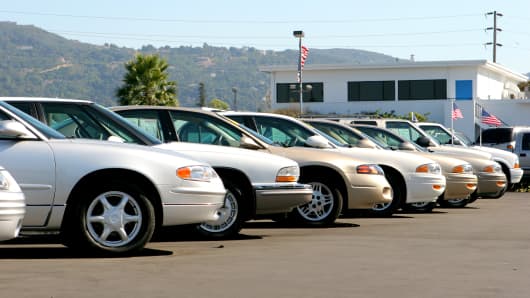
Cars on display at a used car lot.


Thinking of donating your clunker to charity for a nice tax deduction? Proceed with caution.

The gifting of used cars to "charities" has become a favorite way for Americans to dispose of unwanted vehicles. And why not? You can avoid the headache of selling or junking the car, help a charitable cause and lower your tax burden all at the same time.


Unfortunately, the experience is rarely, in reality, such a win-win situation. Not only do charities typically see little of the proceeds from a used car sale, but donors can run afoul of the taxman if they're not careful.

"At the end of the day, donating a used car could be the least cost-effective way to give to a charity," said Stephanie Kalivas, an analyst with CharityWatch, an organization that monitors the charitable giving industry.

The problem is the industry is riddled with fraud and misrepresentation. Attorneys General from multiple states have investigated car donation charities for false advertising and self-dealing. Many of the organizations are for-profit intermediaries that give token contributions to a participating charity. Others misrepresent the cause they support and/or give low percentages of their funds raised to their stated targets.

Kars4Kids, for example, a New Jersey-based organization with an insipid yet highly successful advertising jingle, has received more than 450,000 car donations, according to its website. The organization, however, got a D rating from CharityWatch because it distributes less than 50 percent of the money it takes in and because, despite a national advertising campaign, it fails to adequately disclose that the money goes to benefit Jewish children only, and almost exclusively in the New York/New Jersey area.

"They're not transparent about what they do," Kalivas said. "A lot of these organizations mislead the public, and people need to be careful."

Wendy Kirwan, director of public relations for Kars4Kids, said the costs of marketing and operating the car-donation program are high but that because the organization processes donations in-house, more money goes to its charitable work than others who use third parties. She also said that while the catchy advertising jingle doesn't spell out which kids benefit from the charity, the information is readily available on their website kars4kids.org. "This is an innovative way to support charity in a way that helps the charity and the donors," said Kirwan. "A lot of people wouldn't otherwise be donating to charity if it wasn't with their car."


For people solely looking to dispose of an unwanted car for which they won't take a tax deduction, it may not seem to matter what happens to the vehicle and who benefits. Kalivas, however, suggests that charities would be much better off if people sold their cars themselves and donated the proceeds, or simply called up charities they know to find out if they have car donation programs.

If the car in question is valuable and you plan to take a deduction for it, protect yourself. Individuals donating cars can inadvertently mark themselves with big red flag for Internal Revenue Service auditors.

When donating a car, here are eight key things you should consider to maximize the benefits to charity and minimize the risk to yourself.
1. Research the charity you plan to give it to. If it doesn't have 501(c)(3) non-profit status with the IRS, it is not a charity and your donation is not tax-deductible.
2. Pick efficient charities to give to. There are multiple organizations such as CharityWatch that evaluate charities and rate them for efficiency in supporting their causes.
3. Itemize. To take a tax deduction for a car donation, you have to itemize deductions on your return. There are detailed rules about the amount you can claim. Taxpayers can deduct the full market value of a donated car under three circumstances: The charity uses the car in its operations; it materially improves the vehicle to sell or use it; or the charity donates or sells it to a needy person for below market value. Otherwise, you can only deduct what the charity receives as proceeds from selling the car.
4. Get a receipt. Make sure to get a receipt from the charity for the vehicle and eventually a document certifying how much the vehicle was sold for. Charities are required to provide that document within 30 days of selling the car.
"At the end of the day, donating a used car could be the least cost-effective way to give to a charity."-Stephanie Kalivas, analyst at CharityWatch
5. Don't forget IRS form 8283. If the sale price or fair market value of the car is greater than $500, you have to complete section A of IRS form 8283 and file it with your tax return. Consult the Kelley Blue Book, the Hearst Black Book or National Auto Dealers Association for market values. If the car is worth more than $5,000, you need to get an independent appraisal of it and also complete Section B of Form 8283.
6. Drop it off. If the car is road-worthy, drive it yourself to the charity you're donating to. It saves money and ensures you're not giving the car to some unrelated, for-profit intermediary. Make sure to sign over the title of the car to the organization and that a representative signs it, as well. If someone is picking the car up, have them sign the title and take a photocopy of it. People have been on the hook for liabilities on donated cars that were not properly signed over to a new owner.

7. Snap it. Take pictures of the car and keep receipts for work and repairs done on it — particularly if you're claiming a deduction for it.
8. Read up. Read IRS publication 4303 — A Donor's Guide to Car Donations.

Reading Time:
How to Donate a Car For Tax Deductions
September 24, 20180 Comments
Image result for car donation taxes

Donating your car to charity can result in significant tax savings if you include it in your charitable contribution deduction. However, doing a little planning will ensure that you maximize the tax savings of your donation. 


The Internal Revenue Service (IRS) requires you to calculate your deduction in one of two ways, depending on how the charity uses your donation. Deductions for cars the charity sells are limited to the sales price. In all other cases, you can use the car's fair market value.

Step 1: Find out how much the charity sold the car for


Use the price the charity obtains for your car in a sale as the amount of your deduction. For example, if the charity sells the car at auction for $3,000, your deduction is limited to $3,000, even if the fair market value is $4,500. However, if the charity sells the car at a significant discount to a needy individual or keeps the car for its own internal use, then you can claim a deduction for its fair market value.

Step 2: Determine the car's fair market value


The IRS suggests that you use a reputable used-car price guide to calculate your deduction when using fair market value. For example, go to your local library and obtain a recent copy of the Kelley Blue Book. Search the private party prices for your vehicle based on its make, model and overall condition. This type of search can be done on the Internet as well.

Step 3: Claiming the deduction


Report the amount of your deduction on line 17 of Schedule A. Since you can only claim a deduction for your car donation if you itemize, the total of all your eligible expenses on Schedule A must exceed the standard deduction amount for your filing status.

If you use TurboTax to prepare your taxes, we’ll help you determine which filing status will get you the biggest tax savings.

Step 4: Additional forms you'll need


Complete Form 8283 if your car donation deduction is more than $500. If your deduction is between $501 and $5,000, you must complete Section A. If your deduction is greater than $5,000, you must complete Section B. If you complete Section B, you must also obtain a written appraisal as documentation.

Again, if you use TurboTax, we’ll ask simple questions and fill in all the right forms for you.

Tips

If the charity sells your car sells for $500 or less, you can deduct $500 or your car’s fair market value, whichever is less. For example, if your car is valued at $650 but sells for $350, you can deduct $500.
Most charities will report the sales price of your car to you on Form 1098-C.

Warnings


You must have documentation of your donation. At a minimum, the documentation you receive from the charity must include your name, the vehicle identification number, the date of your donation and a statement describing the goods and services you received, if any.
Reading Time:
Car Donation Service in California (CA) How to Donate a Car
September 24, 20180 Comments


California car donation is easy in the “Golden State”. Keep in mind that when you donate your car in CA, you’ll receive a tax receipt. With the huge number of programs out there vying for your vehicle donation, it may be hard to figure out the best organization to donate your car to. 


Car Donation Wizard proudly partners with the best national and local charities. How do we choose who’s the best? We look for organizations that will best use the money raised from your vehicle donation to help change the lives of others. Organizations like the American Cancer Society, V-Dac (Vehicle Donation to Any Charity), Car Talk, the U.S. Fund for UNICEF, Habitat for Humanity, the North Shore Animal League and many more. Donate your car, SUV, boat on a trailer, motorcycle, motorhome or other vehicle to charity today and we’ll help return 80% of the net proceeds back to your charity.

This is more than any other California or national organization can say. Check us out through the California Attorney General’s website, where it’s every vehicle donation program’s responsibility to publically submit their return to charity.

If you have an older model, higher mileage vehicle that might be releasing harmful emissions, our donation program can also help you recycle your old vehicle in California. Recycling a car helps create steel for use in future vehicles, with steel being the number one most recycled product in the U.S. Start your California car donation today with one of our great nonprofits. If you still have questions on what to donate, how to donate, or who to donate to, call our customer service team at 877-957-2277.

How do I sign my title to donate a car in California?

For detailed instructions on how to properly fill out your title click on one of the pictures below to see an example title.
How do I release the liability of my donated vehicle in California (CA)?
The state of California DOES require a Certificate of Title in order to transfer ownership of your vehicle. If your vehicle was last titled in the state of CA we can accept a Reg 262 and Reg 227 form in place of the title. These are secure forms that can be obtained at any local DMV office. We ask that your license plates remain on the vehicle at the time of pick-up UNLESS they are personalized.
In order to complete your California car donation, transfer your title by entering the name of our authorized agent, ADVANCED REMARKETING SERVICES in the buyer/purchaser field. Please PRINT and SIGN your name in the seller/owner field EXACTLY as it appears at the top of the title.

Helpful State Links
California Department of Motor Vehicles
Learn more about California
California Secretary of State
Cities and Towns in California
Anaheim, Bakersfield, Chula Vista, Fremont, Fresno, Irvine, Long Beach, Los Angeles, Modesto, Oakland, Riverside, Sacramento, San Diego, San Francisco, San Jose, Stockton

Reading Time: